Solar storms continue
Posted: Thu, Oct 30, 2003, 7:48 AM ET (1248 GMT)
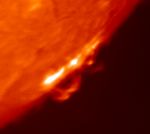 A major solar storm passed by the Earth early Wednesday with only minor effects, but another storm is expected to reach the Earth Thursday. The storm, which reached a G5 on the one-to-five scale of geomagnetic storm activity, hit Earth at 1:13 am EST (0613 GMT) Wednesday, nearly 11 hours earlier than planned because the storm moved much faster than scientists expected. The storm did cause some minor disruptions to communications, primarily affecting aircraft in far northern regions. The storm also shut down Japan's Data Relay Test Satellite, or Kodama; the year-old satellite may have been crippled by the effects of the storm. Contact with another Japanese satellite, Midori-2, was lost on Saturday during another period of solar activity, although engineers don't know if the events are linked. Another powerful flare was spotted on the Sun around 4pm EST (2100 GMT) Wednesday, and the storm associated with that event is expected to reach the Earth by late Thursday. The flare associated with this storm is weaker than the earlier flare, but scientists noted the possibility that, unlike the first storm, this new storm could have the opposite orientation than the Earth's magnetic field, and thus amplify its effects.
A major solar storm passed by the Earth early Wednesday with only minor effects, but another storm is expected to reach the Earth Thursday. The storm, which reached a G5 on the one-to-five scale of geomagnetic storm activity, hit Earth at 1:13 am EST (0613 GMT) Wednesday, nearly 11 hours earlier than planned because the storm moved much faster than scientists expected. The storm did cause some minor disruptions to communications, primarily affecting aircraft in far northern regions. The storm also shut down Japan's Data Relay Test Satellite, or Kodama; the year-old satellite may have been crippled by the effects of the storm. Contact with another Japanese satellite, Midori-2, was lost on Saturday during another period of solar activity, although engineers don't know if the events are linked. Another powerful flare was spotted on the Sun around 4pm EST (2100 GMT) Wednesday, and the storm associated with that event is expected to reach the Earth by late Thursday. The flare associated with this storm is weaker than the earlier flare, but scientists noted the possibility that, unlike the first storm, this new storm could have the opposite orientation than the Earth's magnetic field, and thus amplify its effects.
Related Links:
| <<previous article | next article>> |
|
news in brief
|
|
|
|
news links
|
|
Friday, September 4
The 300-year-old tool helping stranded astronauts get home
BBC — 7:09 am ET (1109 GMT) Bezos’ Blue Origin Has Poached Dozens of Amazon Satellite Engineers
Bloomberg News — 7:05 am ET (1105 GMT) SpaceX, Blue Origin ditch Paris space summit: France ministry
AFP — 7:05 am ET (1105 GMT) ‘Launchpad to the stars’: Ashley Moody moves to place Space Academy on Space Coast
Florida Politics — 7:04 am ET (1104 GMT) Schiess Sworn in as New Space Force Chief: ‘We Must Grow with Intention’
Aviation Week — 7:04 am ET (1104 GMT) |
