Scientists track down mysteries of solar neutrinos, cosmic rays
Posted: Thu, Apr 25, 2002, 6:30 AM ET (1030 GMT)
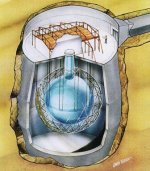 Scientists have found new evidence that explains the mystery of "missing" solar neutrinos as well as the origins of the most powerful cosmic rays. Scientists announced at a recent meeting of the American Physical Society and American Astronomical Society in Albuquerque that they believe that the Sun emits as many neutrinos as predicted by existing models, but that some of those neutrinos change from one type to another while passing through matter. These findings, which confirm preliminary results announced last year, appear to solve the "solar neutrino problem" first identified in the 1960s when neutrino detectors failed to find as many neutrinos as predicted by theory. At the same conference, another team of astronomers announced that they have linked the most energetic types of cosmic rays with "retired" quasars: supermassive black holes in the centers of galaxies that no longer emit huge amounts of x-rays. These black holes accelerate subatomic particles that each have the same amount of energy as a major league fastball.
Scientists have found new evidence that explains the mystery of "missing" solar neutrinos as well as the origins of the most powerful cosmic rays. Scientists announced at a recent meeting of the American Physical Society and American Astronomical Society in Albuquerque that they believe that the Sun emits as many neutrinos as predicted by existing models, but that some of those neutrinos change from one type to another while passing through matter. These findings, which confirm preliminary results announced last year, appear to solve the "solar neutrino problem" first identified in the 1960s when neutrino detectors failed to find as many neutrinos as predicted by theory. At the same conference, another team of astronomers announced that they have linked the most energetic types of cosmic rays with "retired" quasars: supermassive black holes in the centers of galaxies that no longer emit huge amounts of x-rays. These black holes accelerate subatomic particles that each have the same amount of energy as a major league fastball.
Related Links:
| <<previous article | next article>> |
|
news in brief
|
|
SpaceX performs two Falcon 9 launches less than an hour apart
Posted: Sun, Aug 16 10:57 AM ET (1457 GMT) Virgin Galactic delays resumption of commercial flights to 2027
Posted: Sun, Aug 16 10:54 AM ET (1454 GMT) |
|
news links
|
|
Friday, August 21
Musk Touts Starlink for India’s Rural Users Amid Stalled Launch
Bloomberg News — 6:52 am ET (1052 GMT) U.S. Space Forces–Space Outlines Joint and Allied Integration Strategies at Space and Missile Defense Symposium
EINPresswire.com — 6:52 am ET (1052 GMT) Williamson County grants tax incentives for Jeff Bezos' Blue Origin
Austin (TX) American-Statesman — 6:43 am ET (1043 GMT) Rocket Lab’s Bold Move to Acquire Iridium: Analysts Break Down the Strategy
ViaSatellite — 6:43 am ET (1043 GMT) SpaceX, AST Said Seeking Grain Spectrum Valued at $6 Billion
Bloomberg News — 6:39 am ET (1039 GMT) |
